
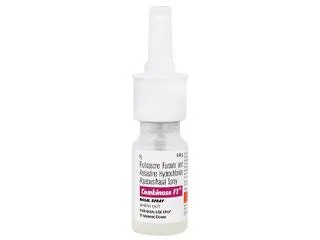
Dymista
A fluticasone and azelastine nasal spray for allergic rhinitis. Two medicines in one spray, one to calm inflammation and one to block histamine.
- Category
- Allergy Relief
- Active ingredients
- Fluticasone · Azelastine
- Supply
- POM
- Route
- Nasal use
- Form
- Nasal spray, suspension
- Strengths
- 50/140mcg
Dymista details
- Condition
- Allergic Rhinitis
- Registration status
- Registered for use in the UK
- Therapeutic class
- Nasal Corticosteroid; Antihistamine
- Pharmacological class
- Corticosteroid; H1 Receptor Antagonist
- Contraindications
- hypersensitivity to fluticasone; hypersensitivity to azelastine
- Minor side effects
- dysgeusia; epistaxis; headache
- Moderate side effects
- nasal ulceration; nasal irritation
- Dosage forms
- Nasal spray, suspension
- Administration route
- Nasal use
- Prescription status
- Prescription-only medicine (POM)
- Originator
- Viatris
- Onset Time
- 30–60 minutes
- Duration
- 12–24 hours
- Storage instructions
- Store below 25°C. Do not refrigerate or freeze.
- Drug interactions
- ritonavir; ketoconazole
- Age restrictions
- Children 12 years and over
Precautions and warnings
use with caution in patients with recent nasal surgery; monitor for systemic corticosteroid effects with prolonged use
Serious side effects
anaphylaxis, requires immediate medical attention; nasal septal perforation, requires immediate medical attention
Patient summary
A fluticasone and azelastine nasal spray for allergic rhinitis. Two medicines in one spray, one to calm inflammation and one to block histamine.
Mechanism of action
A combination of a glucocorticoid and a histamine H1 receptor antagonist. It works by reducing nasal inflammation and blocking histamine activity to reduce allergic symptoms.
Pregnancy and breastfeeding
Pregnancy: Use only if clearly necessary. Breastfeeding: Consult a doctor before use as it is unknown if the medicine passes into breast milk.
Registered for use in the UK
- United Kingdom
Dymista editorial notes
Dymista is a UK-licensed nasal spray, suspension containing Fluticasone and Azelastine, a prescription-only medicine (POM).
Is Dymista available in the UK?
Yes, on prescription. Fluticasone and Azelastine is prescription-only in the UK, so it is supplied against a prescription after an assessment by a prescriber. How to check an online pharmacy is legitimate.
Dymista vs the generic
The active ingredient is the same as in generic Fluticasone, which usually costs less and is what the NHS dispenses. See Fluticasone.
Common questions
Can you buy Dymista over the counter in the UK? No, it is prescription-only.
Is there a cheaper version? Generic Fluticasone is the same active ingredient, usually for less.
What is Dymista used for? It is listed for allergic rhinitis.
Where to Check Availability
OK Healthy doesn't sell or supply medicines. These are independent external pharmacies, so check current availability and prices on their own sites.
These links open external pharmacy websites, not OK Healthy, and some are affiliate links, and we may earn a commission at no extra cost to you.How to check an online pharmacy is legitimate