
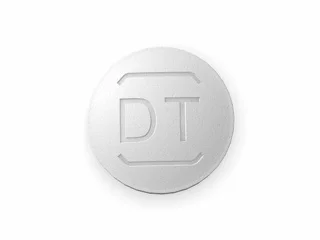
Detrol
Tolterodine tablets for an overactive bladder. It calms the bladder muscle, reducing the urgency and frequency of needing to urinate.
- Category
- Bladder Health
- Active ingredient
- Tolterodine
- Supply
- POM
- Route
- Oral use
- Form
- Film-coated tablet; Prolonged-release capsule, hard
- Strengths
- 1 · 2mg
Detrol details
- Condition
- Overactive Bladder
- Alternative names
- Detrusitol
- Registration status
- Not registered in the UK
- Therapeutic class
- Muscarinic Receptor Antagonist
- Pharmacological class
- Anticholinergic
- Minor side effects
- dry mouth; dyspepsia; headache; constipation
- Moderate side effects
- somnolence; blurred vision; urinary tract infection; dry eyes
- Dosage forms
- Film-coated tablet; Prolonged-release capsule, hard
- Administration route
- Oral use
- Prescription status
- Prescription-only medicine (POM)
- Originator
- Pfizer
- Onset Time
- 1–2 hours
- Duration
- 12–24 hours
- Storage instructions
- Store at room temperature in a cool, dry place away from light.
- Drug interactions
- other anticholinergics; potassium; metoclopramide
- Age restrictions
- Not recommended for children.
Contraindications
urinary retention; uncontrolled angle-closure glaucoma; severe hepatic impairment; hypersensitivity to tolterodine
Precautions and warnings
use with caution in elderly patients; monitor for gastrointestinal motility issues; caution in patients with existing heart rhythm disorders
Serious side effects
anaphylaxis, requires immediate medical attention; angioedema, requires immediate medical attention
Patient summary
Tolterodine tablets for an overactive bladder. It calms the bladder muscle, reducing the urgency and frequency of needing to urinate.
Mechanism of action
Blocks cholinergic receptors at the bladder neuroeffector site, reducing detrusor muscle contractions to stabilize bladder function and reduce urgency.
Pregnancy and breastfeeding
Pregnancy: Information is limited; consult your doctor. Breastfeeding: Not recommended, as the medicine may transition into breast milk.
Not registered in the UK
- United Kingdom
Detrol editorial notes
Detrol is an overseas brand of Tolterodine, and it is not registered in the UK.
Is Detrol available in the UK?
Detrol is not a UK-licensed product. Whether Tolterodine is licensed in the UK can vary by molecule, so a UK pharmacist or GP can confirm its status and a suitable licensed option for overactive bladder. How buying medicines from abroad works.
Common questions
Can I get Detrol in the UK? The brand is not UK-registered. A pharmacist or GP can advise on a licensed UK option for overactive bladder.
Where to Check Availability
OK Healthy doesn't sell or supply medicines. These are independent external pharmacies, so check current availability and prices on their own sites.
These links open external pharmacy websites, not OK Healthy, and some are affiliate links, and we may earn a commission at no extra cost to you.How to check an online pharmacy is legitimate